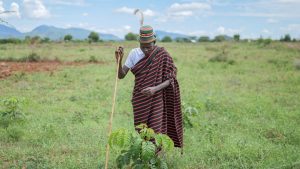
For years, charcoal burning was the source of Moru James’ livelihood. At just 36 years old, the father of seven from Domoye Village in Lolachat Subcounty, Nabilatuk District of North Eastern Uganda, spent six years cutting down trees in his community and neighboring villages to produce charcoal for sale at the Nabilatuk market.
“It was a good business, and it helped me take care of my family,” Moru recalls. “I didn’t know that cutting trees was bad. I just found people doing it and joined in.”
But the consequences of this practice have become clear. Across the Karamoja sub-region, which includes Nabilatuk, deforestation and land degradation have reached alarming levels. This growing environmental crisis prompted Catholic Relief Services to include the district as part of the implementation sites for the Evergreening Global Alliance’s Restore Africa programme, which aims to restore ecosystems while supporting communities with sustainable alternatives.
Moru is now one of the faces of this change. In 2024, he received 262 tree seedlings through the project. He planted them and 182 survived. “The knowledge I’ve gained from Restore Africa has changed me,” he says. “I’m now interested in trees. They break the wind and, in the future, they will provide timber and firewood for cooking. I will also eat the fruit.
To support his family while the trees grow, Moru has turned to farming vegetables and tomatoes, alongside running a small grocery shop in his neighbourhood. What began as a shift in practice has grown into a vision for the future. He has already dedicated two acres of land to tree planting and plans to expand.
From a charcoal burner to a committed tree grower, Moru James’ story is not just one of personal transformation, but a glimpse of hope for a region working to heal its land.
Story by Lanyero Flavia, CRS, Restore Africa Implementing Lead in Uganda
Photos by Kizito Mudambo.