Innovation and fostering a culture of continuous learning are central to our flagship program, Restore Africa: Restoring Landscapes and Livelihoods in East and Southern Africa with Climate Asset Management, which is leading the way in large-scale ecosystem restoration through private sector investment in nature-based solutions.
Launched in 2022, the program has made great strides in accelerating the adoption of evergreening practices by smallholder farmers and pastoralists to restore their degraded landscapes and transform their livelihoods.
The implementing teams gathered in Fort Portal, Uganda, at the foot of the mighty Rwenzori Mountains, for a one-week event to pause and celebrate achievements so far, share lessons learned, and brainstorm ways to scale up activities as the project marks three years of implementation.
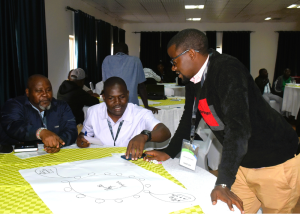
Project team leaders presented the programme’s achievements across the three countries. These presentations were followed by sessions organised by thematic working groups, which delved into core components guiding the programme’s implementation. These included monitoring, reporting and verification; strengthening livelihoods and gender, scaling of agroforestry implementation plans and community engagement, amongst others.
Evergreening Global Alliance CEO, Chris Armitage attended the event and congratulated the team on their dedication and effort in realising the ambitions of this innovative program that is charting a new pathway for financing massive land restoration programs delivering impact at scale.
Celebrating Key Achievements
Community engagement: The community is at the heart of Restore Africa. The program has successfully rolled out a Free, Prior, and Informed Consent (FPIC) process to ensure that farmers and pastoralists understand the program, its approach, and the benefits to their food security, livelihoods, and the planet. To date, nearly 300,000 farmers have been reached, with 230,000 enrolled in the program. Collectively, they have planted over 14 million trees and regenerated nearly 4 million trees through Farmer-Managed Natural Regeneration (FMNR).
Environmental and Social Impact Assessments (ESIA): The program has completed its ESIAs and submitted the reports to the respective national environmental protection authorities in the three countries (National Environmental Management Authorities of Kenya and Uganda, and Malawi Environmental Protection Agency (MEPA)).
Monitoring, Reporting, and Verification (MRV): With the first round of carbon credit payments approaching, the program is entering a critical phase—finalising registration with the Global Standard for the Global Goals and setting up a robust MRV system. This will enable the programme to reward smallholder farmers and pastoralists for their contributions to climate change mitigation, in addition to the enhanced t productivity of their restored landscapes.
To support this work, the team has developed a set of digital tools, including the Eligibility Project Area Locator (EPAL), which assesses the suitability of sites for restoration as informed by Gold Standard, and the Tree Planting Area Locator (TPAL), which tracks tree planting activities. A real-time database has also been created to monitor progress and achievements across the three countries.
In addition, carbon baselining has been started to establish the levels of carbon in project sites before the programme activities commence. This will allow the accurate measurement of the carbon captured through its restoration efforts
Strengthening livelihoods: Restore Africa goes beyond tree planting—it aims to transform rural livelihoods. By strengthening agroforestry-based value chains, the program helps farmers not only grow trees but also boost their productivity and incomes.
In Kenya, 49 demonstration farms have been established to train farmers right through from production to post-harvest management and on to the marketing of prioritised value chains.
Robust tree seedling supply systems: The program aims to plant or naturally regenerate over 50 million trees across Malawi, Uganda, and Kenya. So far, 15 million trees have been planted and/or managed through Farmers Assisted Natural Regeneration (FMNR). The team discussed strategies for building a reliable supply pipeline for high-quality tree seedlings to ensure farmers receive them at the right time before the rain.
Inclusivity is Key: Restore Africa is intentionally designed to engage marginalised groups, including women, youth, and people with disabilities. Thanks to these efforts, women make up 54% of all farmers involved in the program, with participation in Malawi reaching an impressive 73%.
The program uses tools such as Gender Equality and Social Inclusion (GESI) assessments to identify barriers to women’s participation in the programme activities such as land ownership and heavy domestic duties at home. The programme is also using participatory approaches like the Gender Action Learning System (GALS) and Engaging Men and Boys to foster inclusive community development.
Field visit: learning from Uganda’s restoration experience
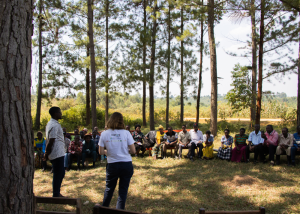
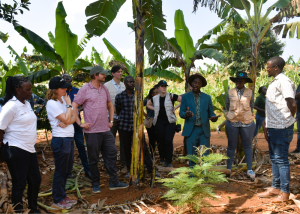
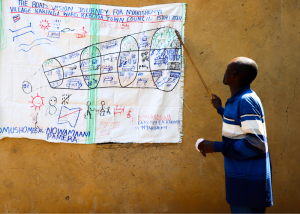
As part of the event, the team visited project sites in Fort Portal and neighbouring districts and interacted with farmers who shared insights into their experiences in land restoration activities. They expressed their hopes and aspirations, identified through community visioning and action planning exercises.
Looking ahead
The team left Fort Portal refocused, energised, and committed to achieving the programme’s goal to create one of the world’s most impactful restoration movements.